AI Vibecoding Explained: What It Is, How It Works, and Why It Matters
AI vibe coding is one of the newest terms gaining attention in the artificial intelligence space. While it may sound informal, vibecoding represents a real shift in how developers, creators, and non-technical users interact with AI to build software, automate tasks, and create digital products.
In this article, we break down what AI vibecoding is, how it works, and why it is becoming an important concept in modern AI-assisted development.
What Is AI Vibecoding?
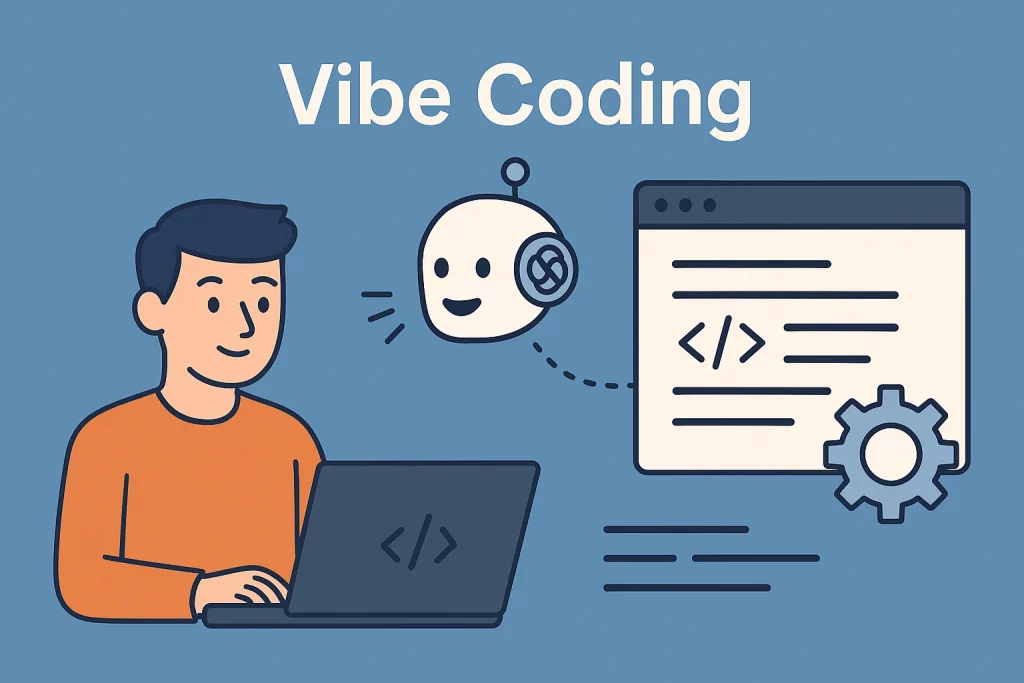
AI vibecoding is a prompt-driven, intuition-based approach to coding where users describe what they want in natural language and allow AI tools to generate, refine, and adjust code in real time.
Instead of writing every line manually, the user focuses on:
- Intent
- Functionality
- Flow
- “Vibe” or outcome
The AI handles the technical syntax.
In simple terms, vibecoding means coding by describing the result, and AI handles the syntax.
How AI Vibecoding Works
AI vibecoding relies on large language models trained on programming languages, frameworks, and software patterns.
The workflow usually looks like this:
- You describe what you want to build
- The AI generates initial code
- You adjust the prompt or give feedback
- The AI refines the code
- You test and iterate
This creates a fast feedback loop where coding becomes conversational rather than mechanical.
Popular Tools Used for AI Vibecoding
AI vibecoding is not a single tool—it is a style of working enabled by modern AI platforms.
Common tools include:
- AI code assistants
- AI chat-based coding tools
- IDEs with AI integration
- No-code and low-code AI platforms
These tools allow developers and non-developers alike to create applications, scripts, websites, and automations using plain language.
Why AI Vibecoding Is Gaining Popularity
1. Lower Barrier to Entry
People without deep programming knowledge can now build functional software by describing what they want. This is expanding who can participate in software creation.
2. Faster Prototyping
Vibecoding allows rapid experimentation. You can test ideas in minutes instead of days, making it ideal for startups, indie developers, and product designers.
3. Focus on Creativity and Logic
Instead of fighting syntax errors, users focus on:
- User experience
- Business logic
- Problem solving
This shifts coding from purely technical work to creative problem design.
4. Better Collaboration
Non-technical team members can participate by explaining requirements directly to AI, reducing communication gaps between designers, founders, and developers.
Is AI Vibecoding Replacing Programmers?
No. AI vibecoding is changing how programming is done, not eliminating the need for skilled developers.
Experienced programmers still:
- Review and optimize AI-generated code
- Ensure security and performance
- Handle architecture and scalability
- Make judgment calls AI cannot
Vibecoding works best as human + AI collaboration, not full automation.
Limitations of AI Vibecoding
Despite its benefits, AI vibecoding has clear limitations:
- Generated code may be inefficient or insecure
- Complex systems still require deep technical expertise
- Over-reliance can reduce understanding of fundamentals
- Debugging AI-generated code can be challenging
Understanding these limits is essential for responsible use.
Who Should Use AI Vibecoding?
AI vibecoding is especially useful for:
- Beginners learning to code
- Startup founders building MVPs
- Designers creating interactive prototypes
- Developers speeding up routine tasks
- Educators teaching programming concepts
It is not a replacement for learning programming fundamentals—but it is a powerful accelerator.
Why AI Vibecoding Matters in the Future of Software
AI vibecoding represents a shift from code-centric development to intent-centric development. As AI models improve, the ability to translate human ideas directly into working software will become more accurate and accessible.
This trend is likely to:
- Increase software innovation
- Reduce development time
- Expand access to technology creation
- Change how coding is taught
In short, vibecoding is not a fad—it is part of a broader evolution in how humans and machines collaborate.
Final Thoughts
AI vibecoding is not about avoiding learning to code. It is about rethinking how ideas become software. By focusing on intent and outcomes, vibecoding allows people to move faster, experiment more, and build with fewer barriers.
As AI tools continue to mature, vibecoding will likely become a standard part of modern development workflows.